How to Reheat Leftovers Without Ruining Texture: Soup, Fried Food, and Casseroles Done Right
Most leftovers don’t fail because of the recipe. They fail because of how they’re reheated. A soup turns flat, fried food goes soggy, and casseroles dry out around the edges while staying cold in the center. It’s not random—it’s the result of applying the same reheating method to very different foods.
Reheating isn’t just about getting food hot again. It’s about managing moisture, temperature, and surface texture at the same time. When those fall out of balance, you lose what made the dish good in the first place.
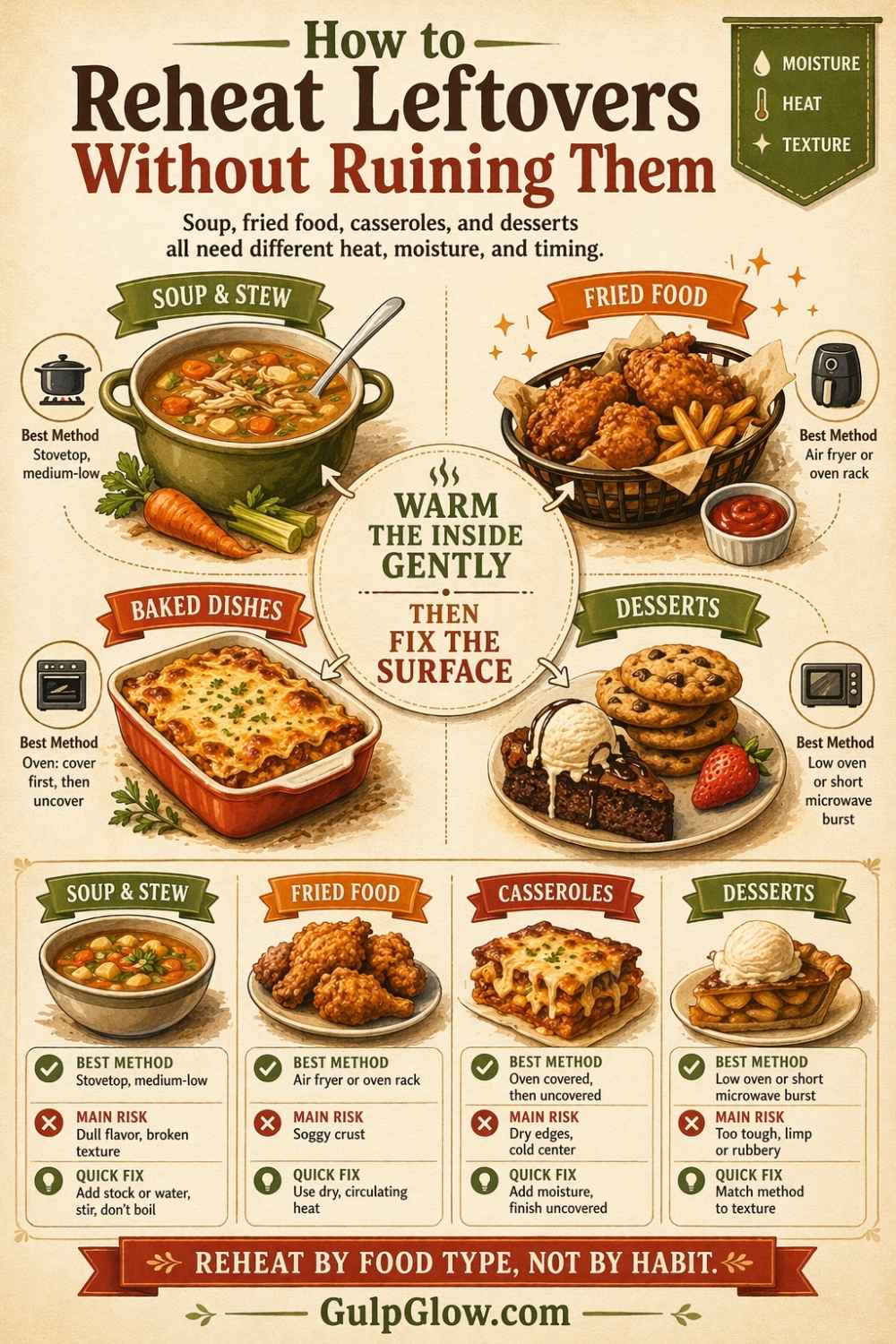
This guide breaks down how to reheat different categories properly—soups and stews, fried food, baked dishes, and even desserts—using the right temperatures, timing, and simple fixes like adding back stock or finishing with dry heat. Once you understand what each type of food needs, leftovers stop feeling like a compromise and start tasting intentional.
Why Leftovers Go Wrong in the First Place
Before getting into methods, it helps to understand why reheating fails. Most problems come down to imbalance. You’re trying to warm the center of the food while preserving everything around it, and those goals often compete.
When heat is too aggressive, the outside overcooks before the inside is ready. When moisture is trapped, crisp textures soften. When moisture is lost, food dries out and feels flat.
There are three common failure points:
- Overheating the center
High heat speeds things up, but it also breaks structure. Proteins tighten, starches dry, and sauces separate. - Trapping or losing moisture at the wrong time
Covering everything creates steam, which is good for some foods and disastrous for others. Leaving everything uncovered dries things out too quickly. - Using one method for everything
A microwave works for soup but ruins fried food. An oven restores crispness but can dry out a casserole if used incorrectly.
The fix is not complicated. It comes down to a simple approach:
Reheat gently to warm the inside, then adjust the surface if needed.
Once you follow that sequence, most leftovers improve immediately.
Soup and Stew: Reheat Liquids Without Flattening Them
Soups and stews seem easy to reheat, but they lose quality quickly if overheated. Broth dulls, cream splits, and thick soups become heavier than they should be.
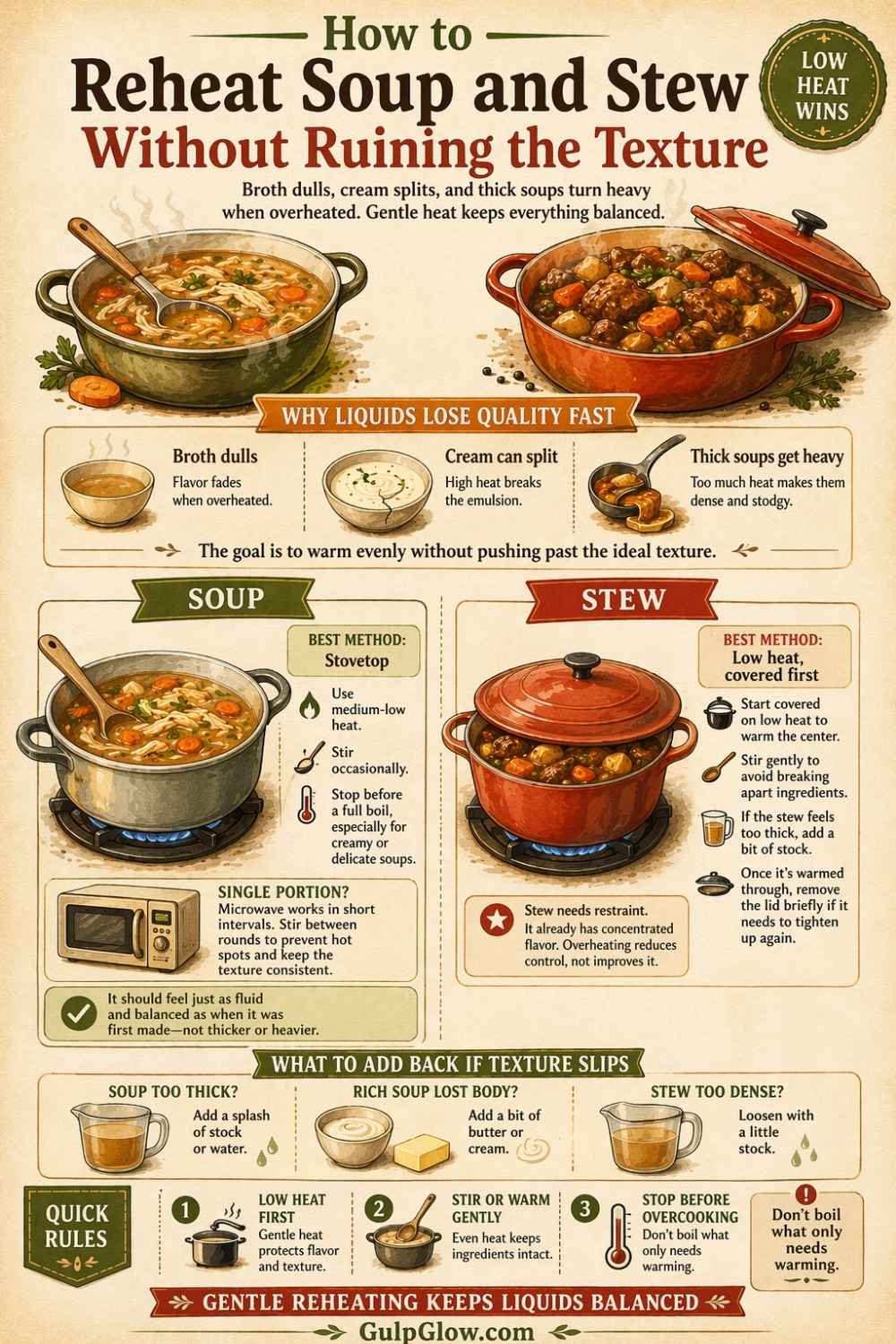
The goal is to warm them evenly without pushing them past their ideal texture.
Soup
For most soups, the stovetop gives the most control.
- Use medium-low heat
- Stir occasionally to distribute heat
- Stop before a full boil, especially for delicate or creamy soups
If you’re reheating a single portion, the microwave works, but use short intervals and stir between them. This prevents hot spots and keeps the texture consistent.
Add-backs matter here. As soup sits, it thickens and loses moisture. A small splash of stock or water restores balance. For richer soups, a bit of butter or cream can bring back the original texture.
If you’re reheating something like a chicken-based soup, it should feel just as fluid and balanced as when it was first made—not thicker or heavier.
Stew
Stews need a slightly different approach. They are thicker, and the ingredients are more sensitive to overcooking.
- Start covered on low heat to warm the center
- Stir gently to avoid breaking apart ingredients
- If the stew feels too thick, add a bit of stock
Once it’s warmed through, you can remove the lid briefly if it needs to tighten up again.
The key difference from soup is restraint. Stews already have concentrated flavor. Overheating them doesn’t improve anything—it just reduces control.
Fried Food: Bring Back the Crisp Without Drying the Inside
Fried food is one of the most common reheating frustrations. The exterior softens, the interior dries out, and the result feels nothing like the original.
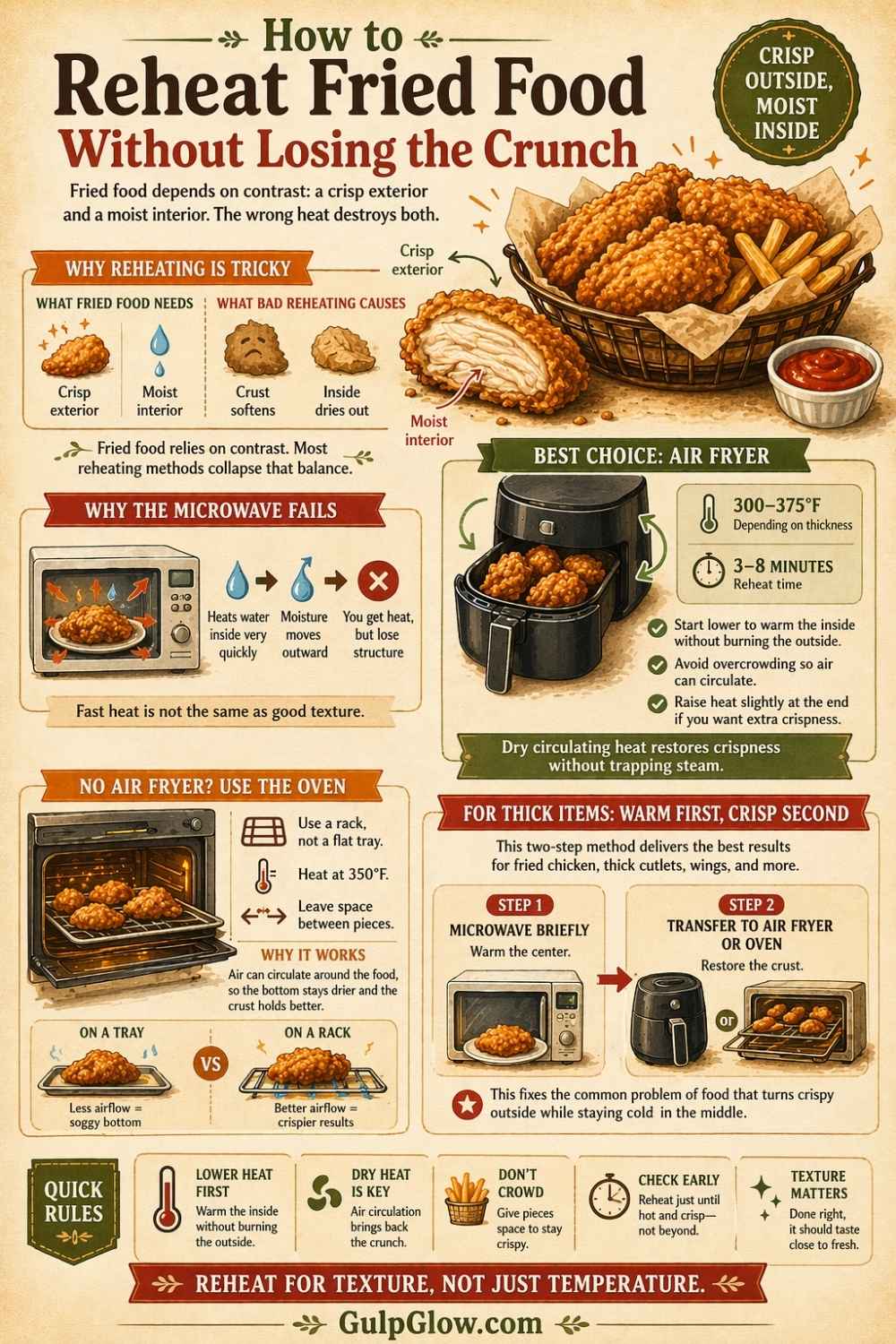
The reason is simple. Fried food relies on contrast: a crisp outside and a moist inside. Most reheating methods destroy that balance.
Why the microwave fails
The microwave heats water inside the food very quickly. That moisture moves outward and softens the crust. You get heat, but you lose structure.
Air fryer as the first choice
An air fryer is the most reliable way to restore crispness.
- Use 300–375°F depending on thickness
- Reheat for 3 to 8 minutes
- Avoid overcrowding so air can circulate
Lower temperatures work better at first because they warm the interior without burning the exterior. You can increase heat slightly at the end if needed.
Oven as a backup
If you don’t have an air fryer, use an oven with a rack.
- Place food on a rack, not a tray
- Heat at 350°F
- Allow space between pieces
This lets heat circulate and keeps the bottom from becoming soggy.
Microwave plus crisp-restore method
For thicker items like fried chicken, a two-step method works best.
- Microwave briefly to warm the center
- Transfer to air fryer or oven to restore the crust
This approach solves the most common problem: food that is crispy outside but still cold inside.
Done properly, reheated fried food should feel close to fresh—not just hot, but textured.
Baked Dishes and Casseroles: Heat Through Without Drying Out
Casseroles are dense by design. That makes them satisfying to eat, but harder to reheat evenly. The edges heat quickly, while the center lags behind. If you rush it, you end up with dry corners and a lukewarm middle.
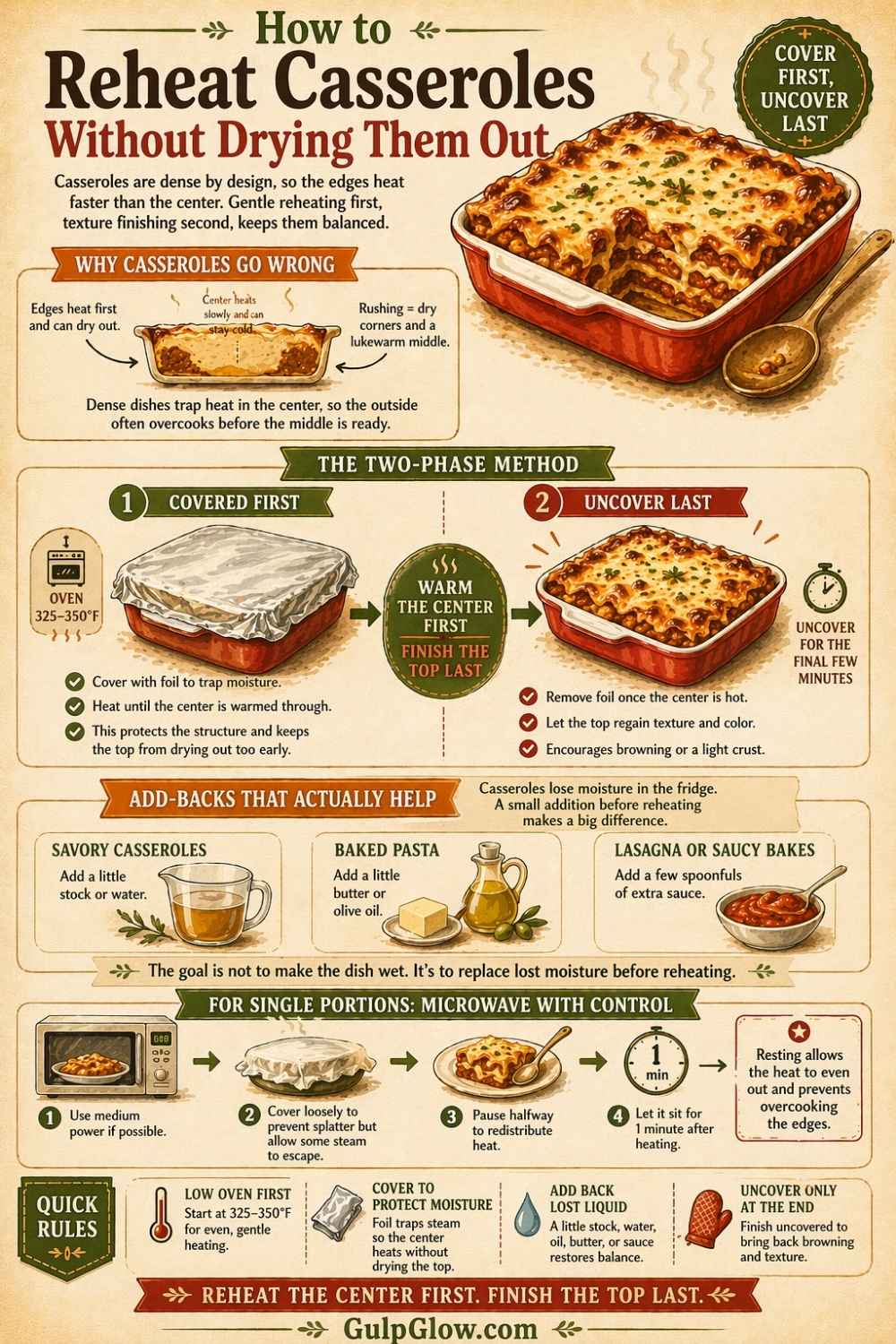
The solution is to separate the process into two phases: gentle reheating first, texture adjustment second.
Covered first, uncovered second
Start by reheating covered in the oven.
- Temperature: 325–350°F
- Cover with foil to trap moisture
- Heat until the center is warmed through
This step protects the structure of the dish. It prevents the top from drying out before the inside is ready.
Once the center is hot, remove the cover for the final few minutes. This lets the top regain some texture, whether that’s a slight crust on baked pasta or a bit of browning on a casserole topping.
Add-backs that actually help
Casseroles often lose moisture in the fridge. Reheating without compensating for that leads to dryness.
A small addition before reheating makes a big difference:
- Stock or water for savory casseroles
- Butter or olive oil for baked pasta
- Extra sauce for dishes like lasagna
The goal is not to make the dish wet. It’s to restore what was lost.
Microwave for single portions
For smaller servings, the microwave is faster but needs a bit of control.
- Use medium power if available
- Cover loosely to prevent splatter but allow some steam to escape
- Pause halfway to redistribute heat
Let the dish sit for a minute after heating. Resting allows the heat to even out and prevents overcooking the edges.
Cookies and Desserts: Rewarm Without Turning Them Tough
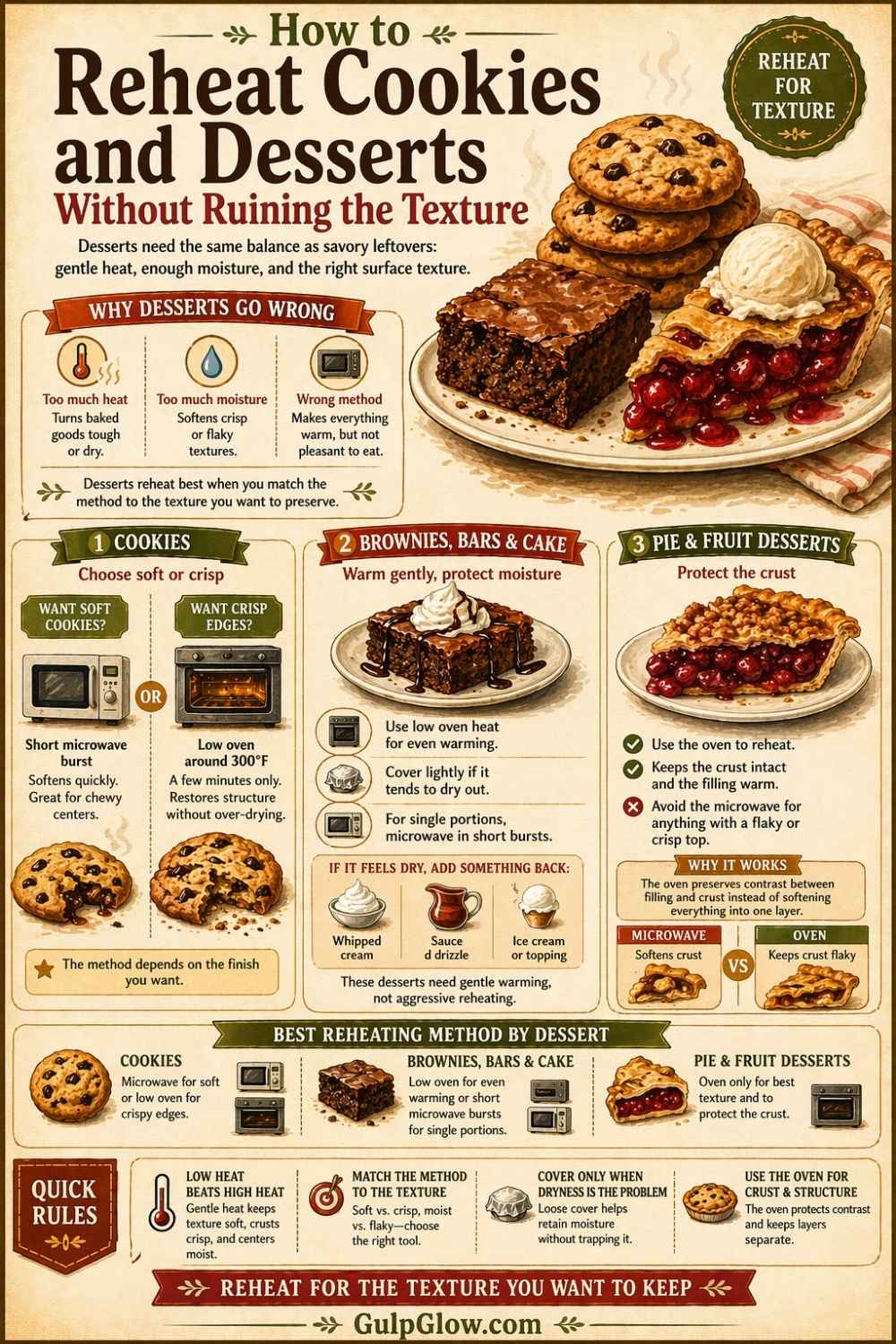
Desserts are often overlooked in reheating guides, but they follow the same principles. You’re balancing heat and moisture while preserving texture.
Cookies
Cookies can go two ways: soft or crisp.
- For soft cookies, a short microwave burst works well
- For crisp edges, use a low oven around 300°F for a few minutes
The oven restores structure without over-drying, while the microwave softens quickly.
Brownies, bars, and cake
These benefit from gentle reheating.
- Use low oven heat for even warming
- Cover lightly if they tend to dry out
- For single portions, microwave in short bursts
If something feels dry, a small addition like whipped cream or a drizzle of sauce can bring it back.
Fruit desserts and pie
Pie and crisp-style desserts rely on contrast between filling and crust.
- Use the oven to reheat so the crust stays intact
- Avoid the microwave for anything with a flaky or crisp top
This preserves texture instead of softening everything into one layer.
The Texture-Restoration Playbook
Once you understand the patterns, most reheating decisions become straightforward.
If food feels dry, it needs moisture:
- Add stock, water, or sauce
- Reheat covered
- Finish gently
If food feels soggy, it needs dry heat:
- Use an air fryer or oven
- Avoid covering
- Let moisture escape
If the outside is overdone but the inside is cold, slow it down:
- Lower the temperature
- Cover initially
- Heat longer instead of hotter
These adjustments are small, but they solve most problems quickly.
Best Reheating Methods by Category
| Food type | Best method | Temp | Time | Add-back | Finish step |
|---|---|---|---|---|---|
| Brothy soup | Stovetop | Medium-low | 5–8 min | Stock or water | Stir and serve |
| Creamy soup | Stovetop low | Low | 4–6 min | Cream or butter | Do not boil |
| Stew | Covered stovetop | Low | 8–12 min | Stock | Uncover briefly if needed |
| Fried food | Air fryer | 300–375°F | 3–8 min | None | Rest 1 minute |
| Casserole | Oven covered | 325–350°F | 20–35 min | Stock, fat, sauce | Uncover last 5–10 min |
| Cookies | Oven | 300°F | 3–5 min | None | Cool briefly |
This table is a reference, not a rule. Adjust based on portion size and thickness.
Common Reheating Mistakes
Some patterns show up repeatedly.
Reheating creamy soups until they boil breaks their texture.
Using high heat to speed things up usually makes food worse, not better.
Skipping add-backs leads to dryness, especially in baked dishes.
Crowding food in the air fryer or oven traps steam and prevents crisping.
Microwaving everything on full power creates uneven heating.
Most of these mistakes come from trying to reheat quickly instead of correctly.
Summary
Reheating works best when you treat it as a two-step process.
Warm the inside gently.
Then fix the surface if needed.
Once you separate those steps, the method becomes obvious. Soup needs moisture and control. Fried food needs air and dry heat. Casseroles need protection first, then finishing.
Leftovers do not have to feel like a downgrade. With a few small adjustments, they can come back close to how they started.