Maple Bourbon Martini: A Rich, Seasonal Twist on a Classic Sipper
Some cocktails announce themselves. Some cocktails whisper. And some cocktails — the best ones — do a little of both, arriving quietly in a chilled glass and then unfolding, sip by sip, into something far richer than you expected.
The maple bourbon martini is that third kind of drink. It looks like a classic martini: a clear, golden pour in a stemmed glass, a twist of lemon on the rim. But the first sip tells you it is something else entirely. The bourbon is warm and oaky. The maple syrup is deep and autumnal, nothing like plain sugar. The lemon keeps it all bright. And the Triple Sec adds a soft orange glow underneath everything.
This is a drink for autumn evenings, when the light goes early and the air smells like woodsmoke. It is rich without being heavy, sweet without being syrupy, and strong enough to be taken seriously. It is the kind of cocktail you make when you want to sit down, properly sit down, with a good drink and nowhere to be.
I first made a version of this on a cold November evening, when the maple syrup in the cupboard caught my eye and the bourbon on the shelf seemed to be asking for company. Maple and bourbon are a natural pairing — both come from the same part of the world, both carry notes of vanilla, caramel and wood — and once you taste them together with lemon, you wonder why you ever made a sour with plain simple syrup.
What makes this one work is that the maple syrup is not just a sweetener. It is a flavour. It brings a dark, woodsy sweetness that sugar cannot match, and it gives the drink a silky texture and a golden colour that plain syrup never could. The lemon is there to keep it honest — a full ounce of it, which is more than most martinis carry, and exactly what this drink needs to stay bright.
If you have ever made a whiskey sour that tasted a little flat, or a martini that tasted a little cold and severe, this recipe is the meeting point between the two. It has the structure of a sour and the elegance of a martini, and it is better than either one on a cold night.
Quick Facts — Maple Bourbon Martini
Method: shaken
Flavor profile: rich, warm, maple-sweet, citrus-bright
How to serve it: chilled, up, in a martini glass
Glassware: martini glass (coupe as a substitute)
Alcohol content: ~24% ABV (before ice dilution), ~22 grams of alcohol per serving (approximate)
Ingredients
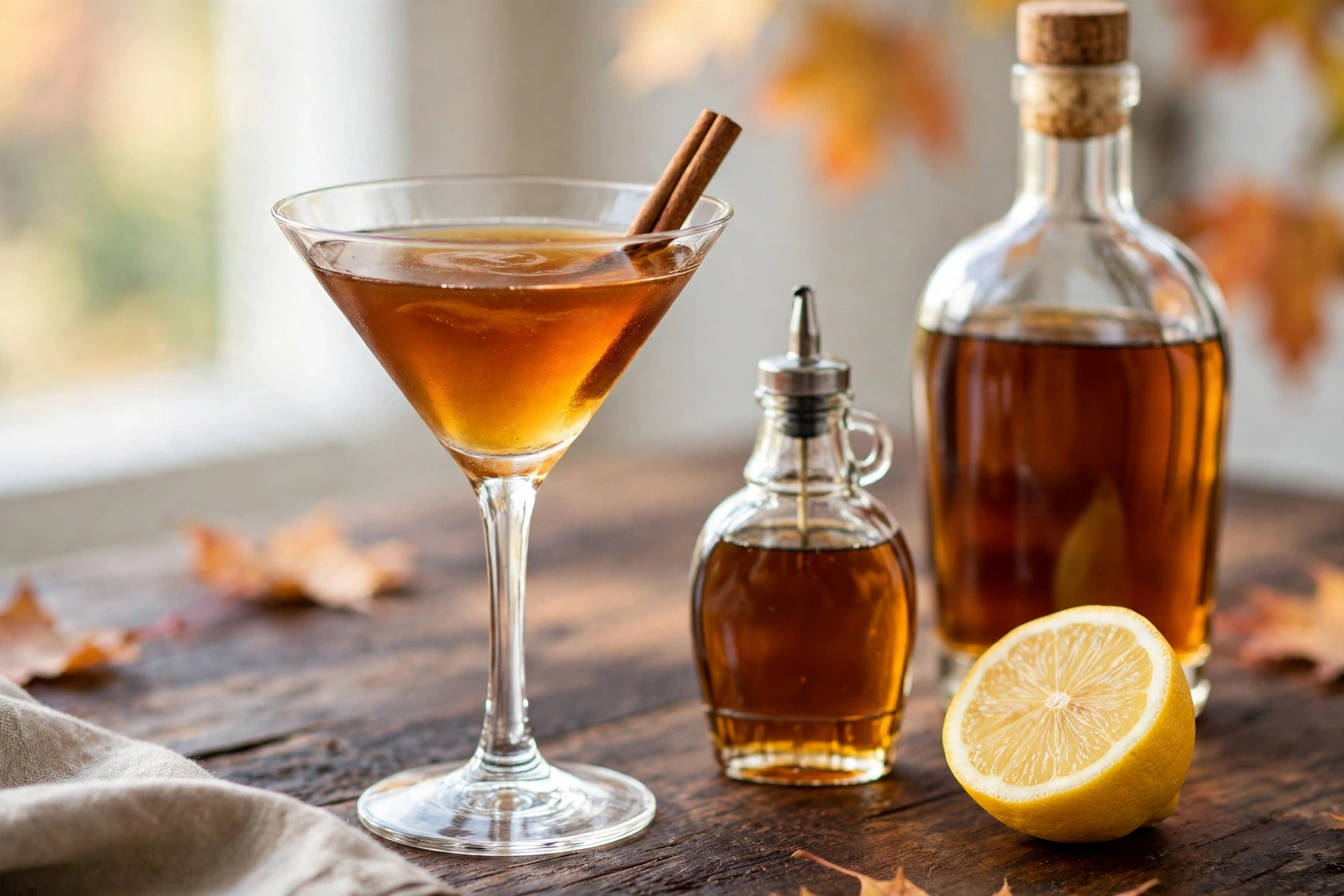
- 2 oz / 60 ml bourbon
- 1/2 oz / 15 ml maple syrup
- 1 oz / 30 ml fresh lemon juice
- 1/2 oz / 15 ml Triple Sec
- 1 dash bitters
- Cinnamon stick or lemon twist, to garnish
The bourbon matters more than you might think. This is a bourbon-forward drink, and the bourbon is half of everything in the glass. A good wheated bourbon, like Maker’s Mark, is especially smooth here — its soft, sweet profile sits beautifully next to the maple. A high-rye bourbon makes a spicier, drier drink, which some people prefer. Either way, use a bourbon you would happily sip on its own. A cheap, harsh bourbon will show through, and no amount of maple will hide it.
Use real maple syrup, and check the label. It should say 100% pure maple syrup, and the ingredients should be exactly one thing: maple syrup. Pancake syrup — the kind made from corn syrup with maple flavouring — is not a substitute. It tastes flat and artificial, and it will make the drink taste like a diner breakfast instead of a cocktail. Grade A dark maple syrup is the best choice here, because it has the strongest, most complex flavour. The lighter grades are lovely on pancakes, but they disappear in a cocktail.
Fresh lemon juice is not optional. A full ounce is a lot of lemon for a martini-style drink, and that is deliberate: it is the counterweight to the maple, and it is what keeps the drink bright instead of heavy. Bottled lemon juice tastes dull and a little bitter, and in a drink where lemon is a quarter of everything in the glass, that dullness shows. One large lemon gives you about 1 oz of juice, so squeeze it fresh and strain out the pulp if you like a cleaner pour.
Triple Sec is the quiet ingredient, and it is worth getting right. It adds a soft orange sweetness that rounds the lemon and the bourbon together. Cointreau is the premium version — 40% ABV, clean and dry — and it works beautifully here, though it will make the drink very slightly stronger. A good Triple Sec at 30% ABV is the standard choice, and it is what the recipe is calculated for. Avoid the cheapest Triple Secs, which can taste syrupy and artificial.
The bitters are a single dash, and they do more work than you would expect from one dash. Angostura bitters add a warm, spiced depth that ties the bourbon and the maple together. Orange bitters are the other good choice, and they make the drink a touch brighter. Either one works; use whichever you have. One dash is enough — two dashes and the bitters start to dominate.
Equipment Needed
- Cocktail shaker
- Jigger, for measuring
- Citrus juicer or reamer
- Fine strainer (optional, for a cleaner pour)
- Martini glass or coupe glass
- Bar spoon
A cocktail shaker is essential here, because this drink needs to be shaken, not stirred. Shaking chills the drink quickly, dilutes it just enough, and gives it a light, frothy texture that stirring cannot match. It also mixes the maple syrup properly — maple syrup is thicker than simple syrup, and it needs the agitation of a good shake to blend fully into the drink.
A jigger is worth using even if you usually free-pour. The ratios in this drink are tight — half an ounce too much lemon or maple changes the balance — and a jigger keeps you honest. This is especially true of the maple syrup, which is easy to over-pour because it is thick and slow.
A citrus juicer or reamer makes quick work of the lemon and gets more juice out of it than squeezing by hand. If you do not have one, roll the lemon firmly on the counter before cutting it, which loosens the juice inside.
A fine strainer is optional but nice. It catches the small bits of ice and lemon pulp, so the drink pours clear and golden into the glass. If you do not have one, the shaker’s built-in strainer is fine.
The martini glass is the right glass for this drink, and not just because of tradition. Its wide, open bowl shows off the golden colour, and its stem keeps your hand away from the drink, so it stays cold. A coupe glass is a good substitute — it is a little more forgiving if you are worried about spilling. Avoid a rocks glass for the straight-up version; this drink is meant to be served chilled and without ice.
Step-by-Step Instructions
- Chill the glass. Put the martini glass in the freezer for 10 minutes, or fill it with ice and cold water while you gather the ingredients. A cold glass keeps the drink cold longer, and this drink is at its best very cold.
- Squeeze the lemon. Cut a lemon in half and squeeze 1 oz of fresh juice into the shaker. Strain out any seeds and as much pulp as you like.
- Measure the liquids. Add 2 oz of bourbon, 1/2 oz of maple syrup, 1 oz of fresh lemon juice, 1/2 oz of Triple Sec and 1 dash of bitters to the shaker. Measure each one with the jigger — this is the step that makes the drink repeatable.
- Add ice and shake. Fill the shaker two-thirds full with fresh ice cubes, not crushed ice. Seal it tightly and shake hard for about 15 seconds, until the outside of the shaker feels very cold and frosty. You should hear the ice rattling loudly; if you cannot, you are not shaking hard enough.
- Strain into the glass. Empty the ice water out of the chilled martini glass, then strain the drink into it. Use a fine strainer as well if you want a perfectly clear pour.
- Garnish. Drop in a cinnamon stick, or twist a strip of lemon peel over the drink to release its oils and then drop it in. Serve immediately, while the drink is cold.
The shake is the step that most people rush, and it is the step that matters most. Fifteen seconds of hard shaking does three things at once: it chills the drink to the right temperature, it dilutes it with just enough melted ice to soften the alcohol, and it aerates it slightly, giving the drink a lighter texture on the tongue. It also blends the maple syrup fully into the drink, which stirring would not do.
If you shake for too short a time, the drink will taste strong and sharp, and the maple will sit in a layer at the bottom. If you shake for too long, it will taste watery. Fifteen seconds, with fresh, hard ice, is the sweet spot.
One more piece of professional advice: always use fresh ice for shaking, never ice that has been sitting in the shaker or in a glass. Fresh, hard ice chills the drink without melting too fast. Soft, half-melted ice waters the drink down before it has even had a chance to chill.
Flavor Profile and Tasting Notes
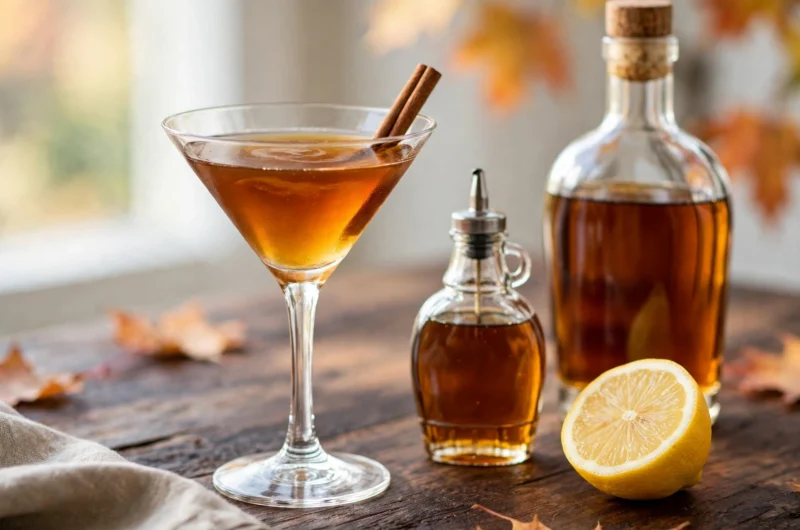
The first thing you notice is the colour. It is a clear, pale gold, the colour of late-afternoon sunlight, and it looks warm before you have even taken a sip.
The first sip is rich and smooth. The bourbon leads, with its vanilla and caramel and a little oak, and the maple follows close behind — dark, woodsy, sweet in a way that sugar never is. The lemon arrives last, bright and clean, lifting the whole drink and keeping it from ever feeling heavy.
The Triple Sec is the quiet hero. You do not taste it as a separate flavour; instead, it rounds the edges of the lemon and the bourbon, adding a soft orange warmth that makes the drink taste complete. Without it, the drink would be a very good whiskey sour. With it, the drink tastes finished.
The mouthfeel is silky and full, thanks to the maple syrup. It coats the mouth gently, which is part of why the drink feels so luxurious. The finish is clean, with the maple lingering for a moment and the lemon staying on the tongue after the bourbon has faded. A dash of bitters adds a faint spiced warmth right at the end.
If you used a cinnamon stick as the garnish, the finish is a little different: the cinnamon adds a warm, woody aroma to every sip, and the drink tastes more autumnal. If you used a lemon twist, the finish is brighter and more citrusy. Both versions are good. The cinnamon version is richer and more seasonal; the lemon version is cleaner and more classic.
To change the flavour profile, try a splash of apple cider — the Apple variation from the original recipe, folded into the serving suggestions below — which makes the drink taste even more like autumn. Or swap the Angostura bitters for orange bitters, which makes the drink taste warmer and rounder. A thin slice of fresh ginger, shaken with the drink and strained out, adds a gentle heat that suits the bourbon.
Garnishing and Presentation
Garnish is not decoration here. It is part of the drink, and it should be chosen with the same care as the ingredients.
A cinnamon stick is the seasonal garnish, and it is the right one for autumn. It leans against the side of the glass, it smells wonderful, and it adds a faint cinnamon warmth to every sip. Use a whole stick, about three inches long, and let it rest in the drink rather than balancing it on the rim.
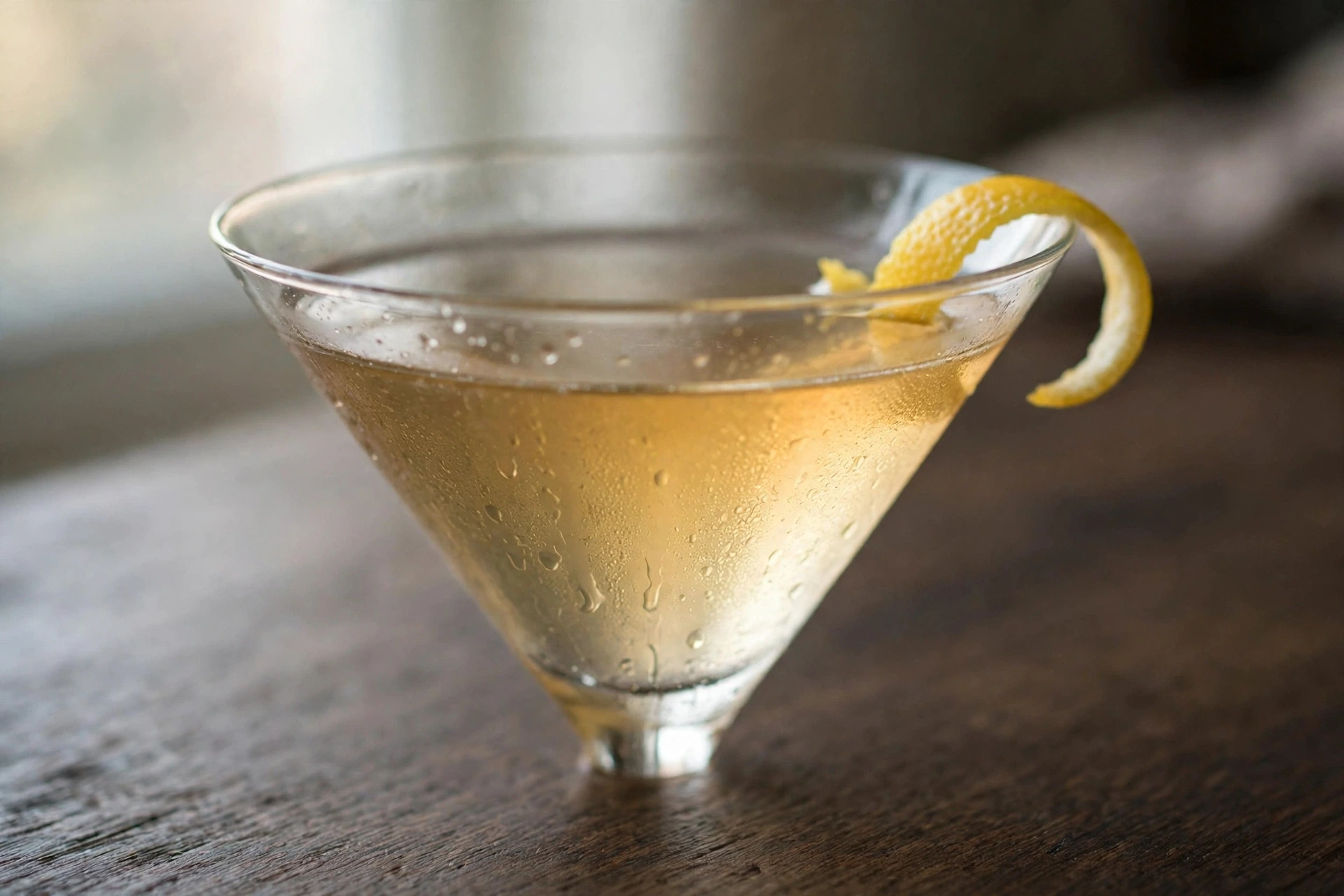
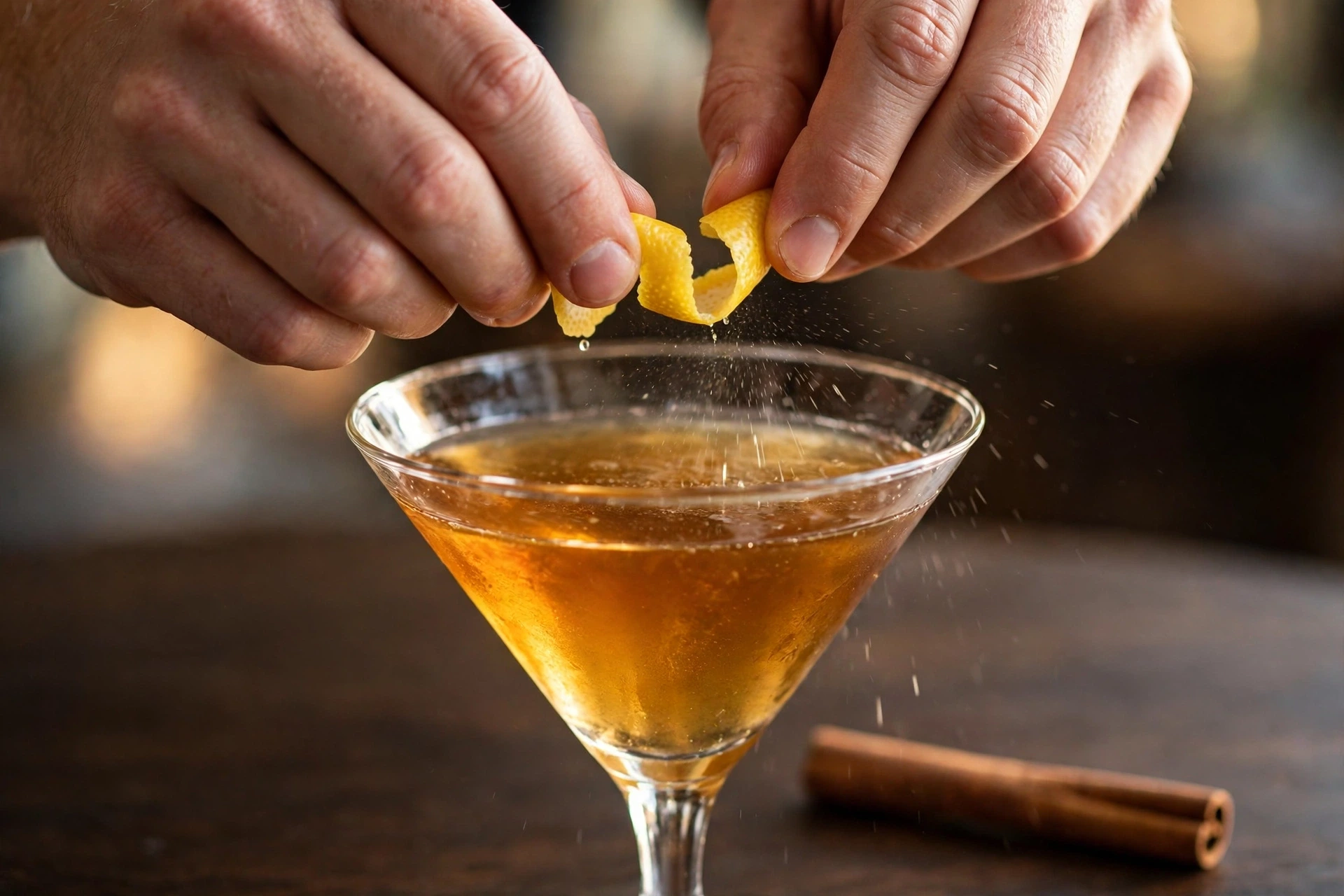
A lemon twist is the classic garnish, and it is the right one if you want the drink to look more like a traditional martini. Twist a strip of lemon peel over the drink first, to release its oils onto the surface, then drop it in. Cut the twist thin, and make it long enough to drape over the rim.
Choose one garnish or the other — not both. A cinnamon stick and a lemon twist in the same glass looks crowded, and the two aromas compete with each other.
For presentation, serve the drink on a small plate or a cocktail napkin, with the glass centred and the garnish facing the drinker. The drink is at its best in the first five minutes, while it is properly cold, so do not let it sit. If you are serving a crowd, line the finished drinks up on a tray — the pale gold colour against a dark tray looks beautiful.
Pairing Suggestions
This martini pairs beautifully with food, because its richness loves salty, savoury flavours and its acidity cuts through fat.
With a cheese board, it is excellent. The bourbon and maple in the glass match the nutty, caramel notes of an aged cheddar or a Gouda, and the lemon cuts through creamy brie. Add some spiced nuts and dried apple slices to the board and the whole thing feels like it was planned together.
With roast pork or roast chicken, it works as an aperitif. Serve it before the meal, with a few olives or a small bowl of mixed nuts, and it wakes up the appetite without filling anyone up. The maple in the glass echoes the sweetness of a glazed ham, which is a nice touch at a holiday table.
With pecan pie or a slice of apple tart, it is a natural match. The bourbon and maple in the drink echo the flavours in the dessert, and the lemon in the drink keeps the whole thing from becoming too sweet. It is one of those pairings where the drink and the dessert make each other taste better.
For a savoury pairing, try it with bacon-wrapped dates or a small plate of cured meats. The salt and the smoke in the food and the sweetness in the drink balance each other perfectly, and the lemon cleanses the palate between bites.
Cocktail History and Trivia
The martini is one of the most famous cocktails in the world, and also one of the most argued about. Nobody agrees on who invented it, or when, or where.
What is generally accepted is that the martini emerged in the late 19th century in the United States, as a gin and vermouth drink — a descendant of the Martinez, a cocktail of gin, sweet vermouth, maraschino and bitters that was already being served in California in the 1860s and 1870s. Over the following decades the martini shed its sweetness, dropping the maraschino and moving from sweet vermouth to dry, until it became the crisp, dry, gin-and-vermouth drink that most people picture when they hear the word.
The bourbon martini is a much newer idea, and it is a very American one. Bourbon and vermouth have been mixed together for well over a century — the Manhattan, which dates to the 1870s or 1880s, is bourbon or rye with sweet vermouth and bitters — but calling a bourbon drink a ‘martini’ is a modern habit, part of the long trend of putting new drinks into the martini’s elegant glass.
The maple bourbon martini, as a specific drink, has no single inventor and no founding story. It is a modern variation, built by bartenders and home cooks who noticed that maple syrup and bourbon belong together — both are North American, both carry notes of vanilla and wood, and both taste like autumn. This recipe does not pretend to be an old drink. It is a new drink built on an old, proven structure, which is exactly how most good cocktails are born.
One piece of trivia worth knowing: maple syrup was used as a sweetener in American drinks long before refined sugar was cheap and plentiful, and it appears in some of the earliest American cocktail books as an alternative to sugar syrup. Using it in a cocktail is not a novelty. It is a return to something old.
Serving Suggestions
This is a drink for slow evenings, and it should be served when people are settling in, not heading out.
Serve it as a welcome drink at an autumn dinner party, made to order in small batches. It takes five minutes per drink, which is fast enough that you can make them one at a time without keeping anyone waiting long. If you have a second shaker, you can make two at once.
It is also a lovely drink for a holiday gathering, and it looks beautiful on a tray. The pale gold colour, the cinnamon stick, the chilled glass — it reads as festive without trying too hard.
The ideal serving temperature is very cold, just above freezing, straight from the shaker into a chilled glass. The drink should be served immediately, while it is still cold and the glass is still frosty. If a drink sits for ten minutes, it warms up, the colour dulls, and the flavour goes flat.
For a larger group, you can scale the recipe by multiplying every ingredient by the number of drinks, mixing everything except the ice in a large jug, and chilling it in the fridge. When it is time to serve, pour each portion into a shaker with ice, shake for fifteen seconds, and strain into a chilled glass. Do not shake the whole batch at once — it will not chill evenly, and it will over-dilute.
The three variations from the original recipe fit naturally here, as ways to serve the same drink differently rather than as separate recipes. For the Spiced version, add a pinch of ground cinnamon and a pinch of ground nutmeg to the shaker before you shake — it makes the drink taste like a spice cupboard in the best possible way. For the Apple version, add 1 oz of apple cider to the shaker and reduce the lemon juice to 3/4 oz, which makes the drink taste even more like autumn. For the Vanilla version, add 1/2 oz of vanilla vodka to the shaker, which makes the drink smoother and a little more dessert-like. All three are the same drink with a different accent, and all three are worth trying.
Alcohol Content and Alternatives
This is a proper cocktail, and it tastes like one. At about 24% ABV before dilution, it is stronger than wine and lighter than a straight spirit, which is the right strength for a drink that is meant to be sipped over an evening.
The alcohol is not hidden here. You can taste the bourbon, and that is a good thing — it gives the drink its backbone. But the maple and the shaking soften it, so the drink goes down easily, which is also why it is worth keeping track of how many you have had.
For a mocktail version, replace the bourbon with 2 oz of non-alcoholic bourbon alternative, and replace the Triple Sec with 1/2 oz of orange juice. Keep the maple syrup and the lemon juice exactly as they are. The result will not taste identical, but it will be golden, rich, maple-sweet and citrus-bright, and nobody at the party will feel left out.
To make the drink weaker, reduce the bourbon to 1 1/2 oz and increase the lemon juice to 1 1/4 oz. To make it stronger, increase the bourbon to 2 1/2 oz and reduce the lemon juice to 3/4 oz — but taste it first, because the balance shifts quickly.
Do not add extra maple syrup to a drink that tastes too strong. Sweetness does not cancel alcohol; it only hides it, which is how people end up drinking more than they meant to. If a drink is too strong, add more lemon juice, not more syrup.
Frequently Asked Questions (FAQ)
Can I use a different whiskey?
Yes. Bourbon is the first choice, but rye whiskey makes a spicier, drier version, and Irish whiskey makes a lighter one. Avoid heavily peated Scotch, which would fight with the maple. Whatever you use, pick a whiskey you would happily sip on its own.
Can I use pancake syrup instead of maple syrup?
No — not if you want the drink to taste right. Pancake syrup is mostly corn syrup with maple flavouring, and it tastes flat and artificial in a cocktail. Use 100% pure maple syrup. Grade A dark is the best choice for the strongest flavour.
Can I make this ahead of time?
You can mix the bourbon, maple syrup, lemon juice, Triple Sec and bitters together in a jug and keep it in the fridge for up to 24 hours. Shake each serving with ice when you are ready to serve. Do not add ice to the jug, and do not garnish the glasses until just before serving.
What if my martini is too sweet?
Add fresh lemon juice a quarter ounce at a time, shaking again briefly after each addition, until it tastes balanced. Do not add more than 1/4 oz extra — if it still tastes sweet, the problem is probably the maple syrup, and a different brand or grade may be sweeter than the one this recipe was written for.
What if my martini is too sour?
Add maple syrup a quarter ounce at a time, shaking again briefly after each addition. Maple syrup is the right fix here, not sugar — it keeps the flavour of the drink intact. Do not add more than 1/4 oz extra.
What if my martini is too strong?
Add a little more lemon juice and maple syrup in equal parts — a quarter ounce of each — and shake again. Or serve the next one over a large ice cube in a rocks glass instead of up, which will dilute it slowly as you drink.
What glass should I use?
A martini glass is ideal, because its wide, open bowl shows off the golden colour and its stem keeps the drink cold. A coupe glass is a good substitute. Avoid tall glasses, which hide the colour, and avoid serving it up in a rocks glass without ice, which warms up too fast.
Can I use Cointreau instead of Triple Sec?
Yes. Use 1/2 oz of Cointreau in place of the Triple Sec. Cointreau is 40% ABV rather than 30%, so the drink will be very slightly stronger — about 25% ABV before dilution instead of 24% — and a touch cleaner in flavour. It is an excellent upgrade.
Printable Recipe Card
Maple Bourbon Martini
1
servings5
minutes5
minutesIngredients
2 oz / 60 ml bourbon
1/2 oz / 15 ml maple syrup
1 oz / 30 ml fresh lemon juice
1/2 oz / 15 ml Triple Sec
1 dash bitters
Cinnamon stick or lemon twist, to garnish
Directions
- Chill the martini glass in the freezer for 10 minutes, or fill it with ice and cold water.
- Add bourbon, maple syrup, lemon juice, Triple Sec and bitters to a shaker.
- Fill the shaker two-thirds full with ice and shake hard for about 15 seconds.
- Empty the chilled glass and strain the drink into it.
- Garnish with a cinnamon stick or a lemon twist. Serve immediately.
Notes
- use 100% pure maple syrup, not pancake syrup.
Conclusion
The maple bourbon martini is proof that a classic does not need reinventing — it just needs a seasonal twist and exact measurements.
It is rich, warm, maple-sweet, and bright. It takes five minutes, it uses ingredients you can find in any supermarket, and it looks like you spent far longer on it than you did. Make it for your next autumn gathering, and watch how quickly the first round disappears.
Try it with a cinnamon stick first, then try the lemon twist, and decide which one is yours. Try the spiced version, the apple version, the vanilla version, and see which one your house argues about. Then tell me in the comments which version won — and whether the maple converted any bourbon sceptics.
Next up on GulpGlow, I will be sharing a creamy white Christmas martini, where a silky, snowy cocktail meets rosemary and cinnamon in a coupe glass. Stay tuned.


